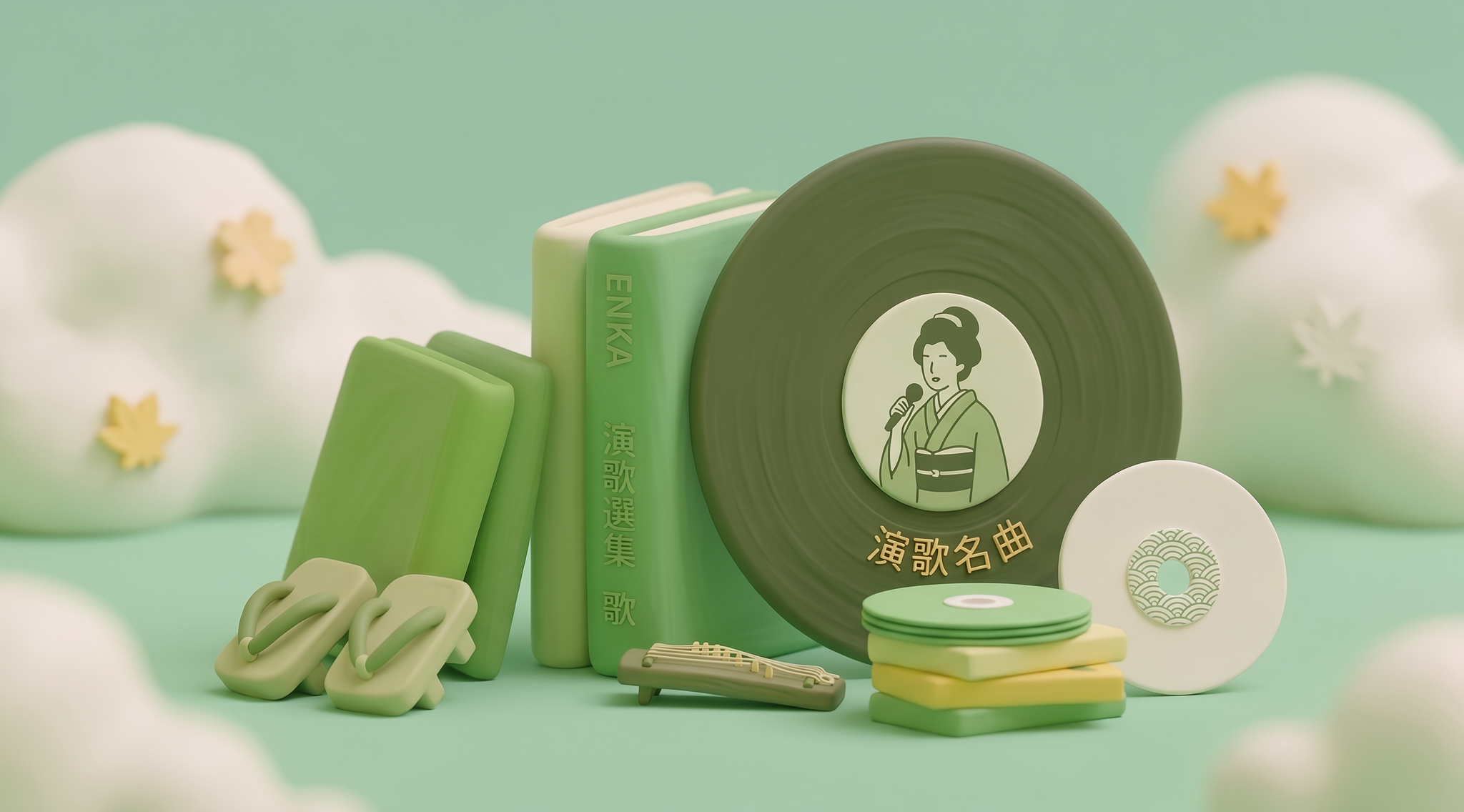
In the quiet corners of Japanese culture, where tradition meets the aching human heart, Enka persists, not as a relic, but as a living, breathing expression of the emotions that words alone cannot hold.
What Is Enka?
Enka (演歌) is a genre of Japanese music that resembles traditional Japanese music stylistically, with a singing style called kobushi, a kind of emotional, melismatic vibrato that conveys deep feeling. Think of it as Japan's answer to the blues: music born from hardship, nostalgia, and the bittersweet beauty of impermanence.
Lyrically, Enka explores themes of love and loss, separation, nostalgia for one's hometown, the changing of seasons, and the passage of time. The imagery is deeply rooted in Japanese aesthetics, cherry blossoms falling, autumn rain, distant mountains, and lonely harbors.
A Brief History
Enka emerged in the early 20th century as a form of kayōkyoku (popular music), but it crystallized into its own distinct genre in the post-war period. The genre's golden age came in the 1970s and 1980s, when artists like Hibari Misora, Kitajima Saburō, and Miyako Harumi became national icons.
Hibari Misora, literally "skylark," remains perhaps the most beloved Japanese singer of all time. Her powerful voice and emotional depth transcended genre boundaries. She recorded over 1,500 songs before her death in 1989, and her influence on Japanese music is immeasurable.
Kitajima Saburō, known as the "Emperor of Enka," specialized in songs about sailors, ports, and the sea, themes that resonated deeply in a maritime nation. His booming voice and dramatic performances made him a television staple for decades.
The Sound of Mono no Aware
At the heart of Enka lies mono no aware (物の哀れ), the Japanese concept of the pathos of things, a bittersweet awareness of impermanence. Where Western music often resolves tension with triumph or closure, Enka lingers in the ache. The music doesn't try to fix the sadness; it honors it.
"Enka doesn't fight the sadness. It sits beside it, pours it a drink, and says: I understand."
The musical structure reflects this. Enka typically uses the Japanese yonanuki scale, a pentatonic scale that omits the 4th and 7th degrees, creating intervals that sound distinctly Japanese to Western ears. Combined with Western chord progressions and instrumentation (violins, acoustic guitar, piano), the result is a sound that bridges East and West, tradition and modernity.
Enka Today
Is Enka dying? The genre's commercial peak has certainly passed. Younger Japanese audiences tend to gravitate toward J-pop, hip-hop, and international genres. But Enka endures in ways that aren't always visible on the charts.
Karaoke boxes still stock Enka catalogs. NHK's annual Kōhaku Uta Gassen (Red and White Song Festival) still features Enka performers. And a new generation of artists, like Misaki and Shima, are finding ways to honor the tradition while speaking to contemporary sensibilities.
There's also a growing international audience, much of it driven by the same internet discovery dynamics that revived City Pop. But where City Pop's appeal is largely aesthetic and nostalgic, Enka's is emotional and philosophical. It asks the listener to sit with difficult feelings, and that's a more universal experience than any particular era or fashion.
Essential Listening
For those new to Enka, these tracks offer a beautiful entry point:
"Like the Flow of a River," her final song, and arguably the most beloved Japanese song ever recorded.
A song about departure, memory, and the northern landscapes of Japan.
Deep crimson passion. A masterclass in kobushi vocal technique.
"The Moon Calls for Two", a hauntingly beautiful love ballad.
"I Want to Become Kind", modern Enka at its most emotionally direct.
Enka reminds us that some feelings are too deep for words but not too deep for music. In a world that often demands we move on quickly, Enka asks us to pause, to feel, and to find beauty in the sadness itself. That's not nostalgia, that's wisdom.