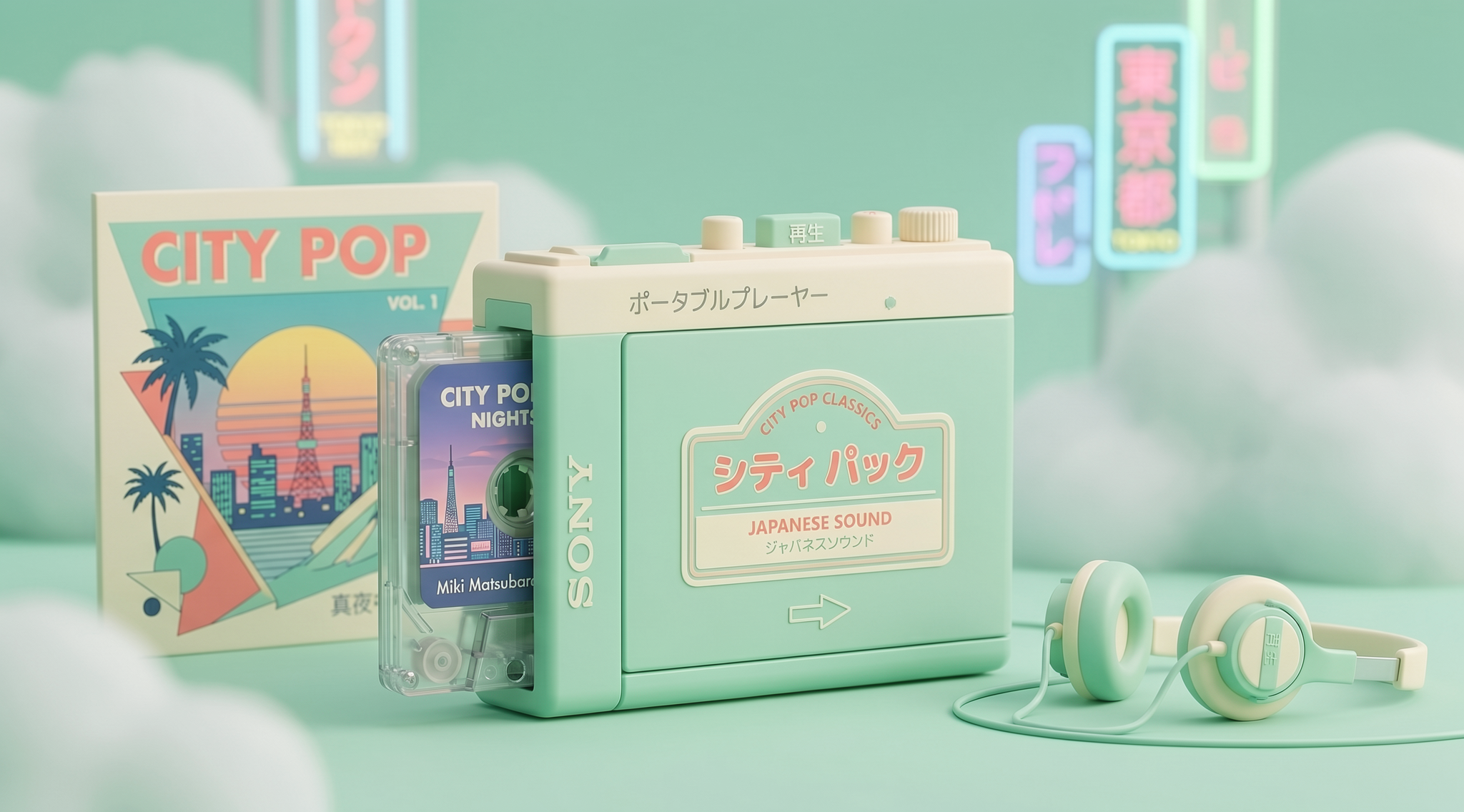
There's a specific kind of nostalgia you feel for a time and place you've never experienced. For many of us, that place is 1980s Tokyo, and the soundtrack is City Pop.
What Is City Pop?
City Pop (シティ・ポップ) isn't a genre that was called by that name during its heyday. The term was coined retroactively by Japanese music enthusiasts and later popularized online. It refers to a style of Japanese pop music that emerged in the late 1970s and peaked in the mid-to-late 1980s, a fusion of funk, disco, soft rock, R&B, and jazz, all filtered through Japan's uniquely polished production sensibility.
The music sounds like driving along the Bayshore Route at dusk with the windows down, the city lights beginning to blink on one by one. It sounds like a warm summer evening, the distant hum of neon, and the promise that everything will work out beautifully.
The Key Artists
Tatsuro Yamashita is often considered the king of City Pop. His meticulous production, silky vocals, and impeccable arrangements, particularly on albums like Ride on Time and For You, define the genre's sound. His wife, Mariya Takeuchi, created perhaps the most iconic City Pop track with "Plastic Love" (1984), a song that would go viral on YouTube decades after its release, sparking a global City Pop renaissance.
Other essential artists include Toshiki Kadomatsu, whose funk-infused tracks practically drip with summer; Anri, whose dreamy vocals float over sophisticated arrangements; Takao Kisugi, a songwriter whose work with producer Ryuichi Sakamoto bridged pop and art music; and Miki Matsubara, whose "Stay With Me" became an anthem for an entire generation, and a new one.
The Sound of Optimism
What makes City Pop so captivating isn't just the music itself, it's the world it evokes. Japan's bubble economy era (roughly 1986–1991) was a period of extraordinary economic growth and cultural confidence. The album covers feature palm trees,convertibles, and sunsets over the Pacific. The production is lush and expensive-sounding. Every note whispers: the future is bright, and we're driving toward it at full speed.
"City Pop is nostalgia for a future that never arrived, or perhaps one that arrived and passed while we weren't looking."
There's a bittersweet quality to listening to City Pop now. Japan's bubble economy burst in the early 1990s, ushering in decades of economic stagnation. The carefree optimism of these songs stands in contrast to the reality that followed. But maybe that's exactly why the music resonates so deeply today, in our own era of uncertainty, it reminds us that joy, however fleeting, is real.
The Internet Renaissance
In 2017, Mariya Takeuchi's "Plastic Love" went viral after a YouTube recommendation algorithm surfaced a vinyl rip with an evocative album cover. The video accumulated tens of millions of views, introducing City Pop to a global audience. Suddenly, playlists, blogs, and YouTube channels dedicated to the genre proliferated.
This digital rediscovery has led to reissues of classic albums, new artists inspired by the City Pop sound (like Yeule and FM Static), and a broader appreciation for Japan's rich pop music history beyond anime soundtracks and J-pop idol culture.
Essential Listening
If you're new to City Pop, here's where to start:
The definitive City Pop anthem. A soaring, sunshine-drenched masterpiece.
The song that started it all (again). Funk, heartbreak, and immaculate production.
Pure summer escapism with brass, slap bass, and unbridled joy.
Dreamy, wistful, and impossibly beautiful. A sunset in song form.
A song about longing that transcends language and time.
City Pop is more than a genre, it's a portal. Each track is a time machine set to a future that glowed with possibility. And the beautiful thing is, we can visit whenever we want. Just press play.