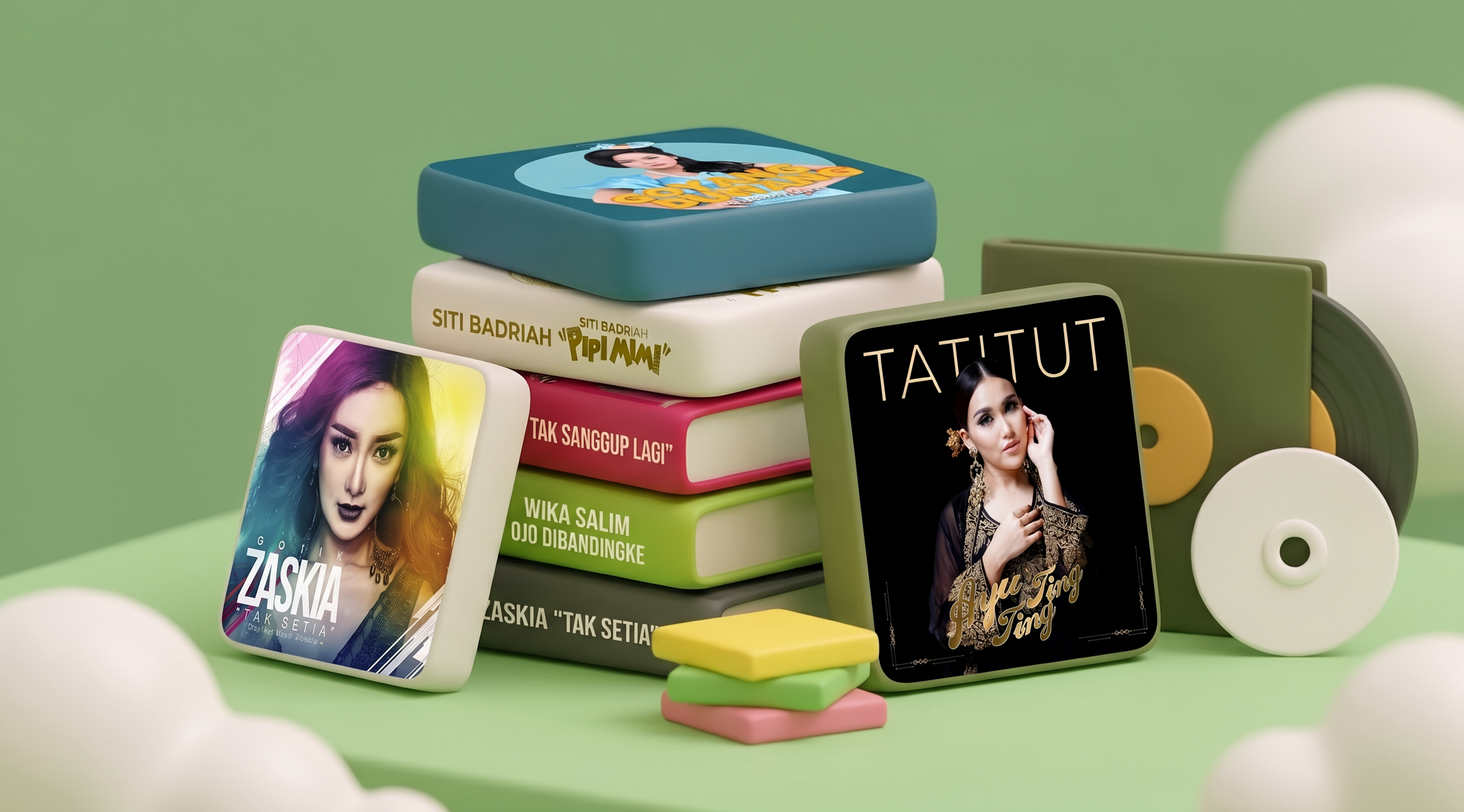
The first time I listened to dangdut music, it felt eerily familiar. The melody wasn’t very foreign and even the words sounded recognizable. I actually ended up feeling nostalgic. It was as if I was discovering something from my own past.
As it turned out, it was no accident. The words, of course, were Indonesian. And much to my surprise many of them meant exactly what I thought they meant. Bahasa Indonesia has many words in common with Sinhala. Rasa, wanita, istri, raja, manusia, roda, sempurna, it warrants an article of its own. Apparently, both languages share a common ancestry in Sanskrit, Dutch and even Portuguese.
And that familiar melody? Well, that was no accident either. While being Indonesian, dangdut was also a melting pot of many different influences and musical styles from around the world. It’s that mix of foreign yet familiar that fascinated me from the beginning and led me to become an ardent fan of this often underrated and under appreciated genre.
An Indonesian Phenomenon
Dangdut is quintessentially an Indonesian phenomenon. It is also testament to the diversity of the country of Indonesia, which has over the centuries drawn from many different influences from faraway places like Arabia and India and have blended these with their own traditional art forms such as orkes melayu to create something that is unique, yet in many ways relatable to many different cultures.
It is, without a doubt, the most popular music genre in the country. Most of the biggest hits recently have been dangdut songs. Cita Citata’s famous ‘Sakitnya Tuh Disini’ and Siti Badriah’s ‘Lagi Syantik’ comes to mind. Even in sporting events, it is not uncommon to hear a dangdut song or two after an Indonesian athlete or team wins the competition.
There are many TV shows dedicated to the genre, even televised awards (most recently the Indonesian Dangdut Awards) and many radio stations which play the characteristic tunes all day long. Music labels like Nagaswara and Sani music specialize in the genre promoting huge names such as Zaskia Gotik and Cita Citata.
The Genre
Dangdut songs are characterized by catchy melodies which are easy to recognize but are probably a bit hard to describe. Think of Indian music, Arabic music, and even traditional Gamelan music. Now mix that with everything from mellow Asiatic beats to upbeat Western house music, and even Eurodance from the 90s. It even has a way of adopting current trends like trap music into its fold, while still remaining uniquely dangdut.
The lyrics are almost always very simple, describing everyday topics such as social and emotional problems. Arguments between husbands and wives, boyfriends and girlfriends, complaints about their significant others, poverty, political issues, and even trending topics of the day are often played out in the songs. And they also contain a good dose of what is often termed Bahasa Gaul, which is sort of the slang of Indonesia. And the usual love that Indonesians have for abbreviations are also portrayed fairly well in the lyrics. For instance, the word Gegana, which stands of 'GElisah, GAlau, MeraNA', which basically means anxious, confused and despondent.
"Dangdut represents a sensitive and useful prism through which to view Indonesian society."
Dangdut for me has two distinct styles to speak of. One would be the kind of low tempo music that heavily draws from traditional music forms, and the other, the more upbeat variety, which has influences from western music such as dance, house and even hip-hop. The latter is almost always associated with dance or ‘Goyang’. There are other sub-genres as well, such as Dangdut Koplo.
It used to be that dangdut was seen as a musical form that is primarily enjoyed among the lower and lower-middle classes (and it still is). But that has changed over the years, where it has found more universal appeal among all walks of life.
Of course, dangdut is not a music form that is appreciated by everyone in Indonesia. In some ways it is akin to what we Sri Lankans like to call ‘bus’ songs. The kind of songs that you hear blaring from oversized speakers in buses. Dangdut also enjoys a similar fame in that you will hear them being played in buses and angkots, those minivans that are a familiar sight in Indonesian roadways.
The term dangdut is an onomatopoeia, which is actually based on the characteristic sound of the gendang tabla drums that were used from the very early days of the genre.
Rhoma Irama
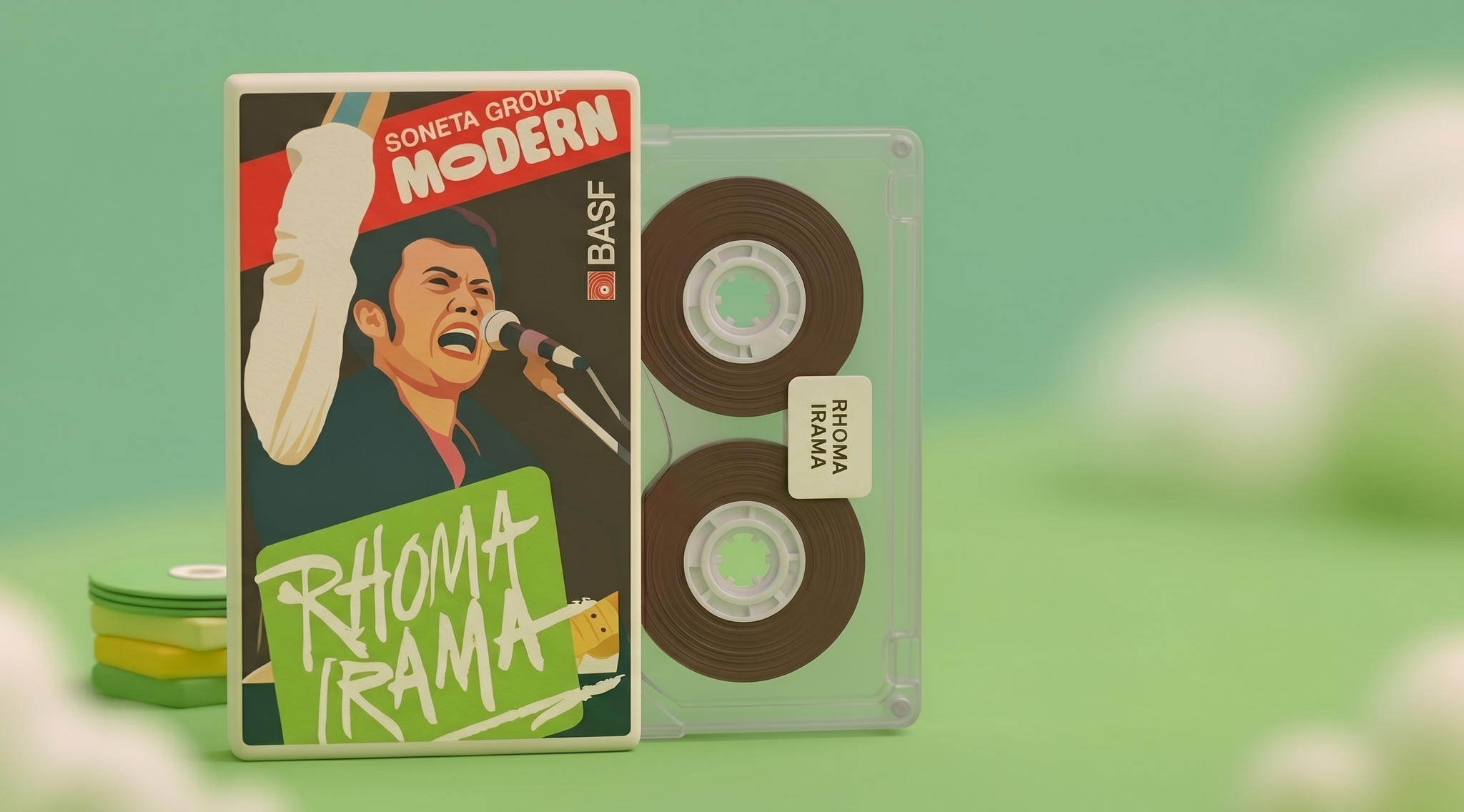
No discussion of dangdut would be complete without a mention of Rhoma Irama, dubbed ‘Raja Dangdut’ or the King of Dangdut. Originally a member of a rock and roll band he went on to blend western influences with orkes melayu, creating the first dangdut band Orkes Melayu Soneta in the late 60s. After completing the hajj pilgrimage in 1975 his music became more religious and Islamic, and he took to heart the idea that music should instruct, not just entertain.
Rhoma Irama campaigned for the Islamic PPP party in the late seventies during the Suharto era and was banned from state radio and television for nearly a decade. It is not unusual even today for dangdut singers to perform at political rallies and pledge their support for a particular candidate.
The other side of dangdut
As dangdut became more popular and it became commercialized it was increasingly being used as a marketing tool. Erotic dance moves were becoming part and parcel of outdoor performances and were introduced by singers like Inul Daratista whose signature dance move Goyang Ngebor (drill) was one of the earliest manifestations of the kind and shot her into fame in the early 2000s.
The introduction of such performances has drawn criticism from the king of Dangdut himself who has accused ‘Inul’ and others of corrupting the genre. It also led to an anti-pornography bill in 2008. Probably the seediest aspect of Dangdut performances is called Sawer, where a male audience member would pay money to the female performer to get on stage and dance with her.
But there have been signs of change with artists like Ayu Ting Ting who deliberately avoid sensual dance moves and try to bring a more playful style to the genre with some added K-pop influence.
Dangdut and Religion
Dangdut as I had mentioned, is a genre of contrasts. On the other end of the spectrum, there are artists like Novi Ayla, donning hijabs and exclusively known for their Dangdut songs of a more religious nature. There are Islamic nasheeds which have been performed in Dangdut style.
Although Dangdut was never an Islamic music form, it drew greatly from Arabic influences such as gambus music and other middle-eastern genres. Even some of the earliest stars of Dangdut such as Elvy Sukaesih, known as Ratu Dangdut or the ‘Queen of Dangdut’ have credited their vocal style to the training they received in Quranic recitation.
The rest of the world
The phenomenon had also been picked up by Malaysia fairly early on, who have produced successful Dangdut singers in the likes of Amelia and Mas Idayu. Once upon a time, it was easy to dismiss the genre as ‘tribal’ or even ‘low-class’ music. But dangdut now enjoys a more general audience and has the potential to appeal to an even wider audience outside South East Asia.
I have introduced dangdut music to some of my friends here in Sri Lanka and they all agree that the music kind of reminds them of Sri Lankan songs. It is that kind of familiarity that makes it both uniquely Indonesian and Universal at the same time.